There's apparently an article in the New Statesman this week, which claims to have been written by yours truly. We don't always claim responsibility for our actions, but I wrote it, I think:
Could hereditary political power be a more tenacious idea than we thought? Two centuries and more after republicanism supposedly set inherited authority on the slope to ruin, a surprising amount of power is still being wielded around the world by the sons of people who wielded it before them. Read more...
Friday, August 25, 2006


Brazil v Nigeria
 "Soccer giants Brazil and Nigeria are to clash in the quarterfinals of the Women's U20 mundial, taking place in the land of the tsars, Russia." That's how a Nigerian newspaper would have put it. Yup, Nigeria play Brazil. Nigeria pummelled Finland 8-0 and look like being equal to the task of beating Brazil. The captain, Akudo Sabi is featured on the FIFA website. She seems like an affable young woman, who goes online and reads what's written about her team. So Akudo, if you're reading this, prends courage, and teach the Brasileiras a football lesson. You can watch it tomorrow (Saturday) at 3pm BST on Eurosport.
I watched a bit of USA against France yesterday, as you do... USA - which has always produced wonderful female players - looked much better than the men's team. It's amazing how the men of one country can be, more or less useless, while the women flourish. Of course this is partly cultural, as "soccer" has always been seen as a girl's sport in the US. So it's only natural that American women are more dominant worldwide than the men. There are some who believe that the US will only become a major world player when the inner city kids are unleashed upon the game. If this happens, we might see something akin to the European exodus undertaken by Africans and South Americans. "All of New Orleans will be watching this game as Kuwayne Griffiths, born in stark poverty in Lousiana, now wears the number 10 shirt for Real Madrid." Or something like that.
I was in San Francisco in 1999 when USA hosted the Women's World Cup. I remember everyone fervently supporting the Falcons, and hoping they'd do an Atlanta '96. It never came. Even though a rampant USA crushed us 7-1 in the group stage, we bowed out with pride. The team lost to Brazil 4-3 after extra time in the quarterfinals. Naturally, they did that most Nigerian of football tactics - went down 3-0, and then clawed their way back. That tournament also produced Brandi Chastain's black bra victory moment (pictured).
My respect for women's football started in 1998 during one summer holiday in Nigeria. There was a girl, whose name escapes me, who played with us regularly in the neighbourhood. She used to school the boys like little illiterate children. Nobody ever wanted to play against her for fear of being laughed at that a girl gave them "torros". Everyone wanted to be on her team so that they could benefit from her skill, vision, and strength, while pointing and scoffing at their oponents. The girl was good.
Thursday, August 24, 2006
Nuggets
Since Alex Last became the BBC's correspondent in Nigeria, he's been working really hard. This week alone, he's sent two wonderful despatches which show he's immersing himself in Nigerian culture. Earlier this week, he sent a despatch on the resurgence of highlife music, interviewing Fatai Rolling Dollar, and speaking to young Nigerians. Today, on World Today, he hitches a ride on an Okada to discuss the nighttime ban on the deathtraps. BBC Newsonline has what is more or less a transcript of the report. But you can also listen to it as part of the World Today's podcast. If that doesn't work, try Newshour, which also ran the same report.
I've searched but can't find the highlife music report. However, I can assure you that it was what you can only be called "saliva radio" - it makes you drool. Music mostly marinated in nostalgia, and effusive characters; makes for radio so good you can almost literally touch it. In June, there was also a report on dwarfs in Nigerian films (watch here). The great thing about Alex Last is that there isn't an iota of condescension in his reporting, which can't be an easy thing to do when reporting from a country like Nigeria. I being presumptious here perhaps, but, my hope is that places like Nigeria aren't stepping stones for reporters to move on to "greater things", like say New York or Brussels. We need good correspondents in our own right, rather than people just passing through.
I've searched but can't find the highlife music report. However, I can assure you that it was what you can only be called "saliva radio" - it makes you drool. Music mostly marinated in nostalgia, and effusive characters; makes for radio so good you can almost literally touch it. In June, there was also a report on dwarfs in Nigerian films (watch here). The great thing about Alex Last is that there isn't an iota of condescension in his reporting, which can't be an easy thing to do when reporting from a country like Nigeria. I being presumptious here perhaps, but, my hope is that places like Nigeria aren't stepping stones for reporters to move on to "greater things", like say New York or Brussels. We need good correspondents in our own right, rather than people just passing through.
Wednesday, August 23, 2006
There are many ways...
There was some stuff in the news recently about the Canary Islands, where more than a thousand African immigrants arrived on its shores within a three-day period. They cried to the EU for help because they couldn't cope. It's a bit difficult to know what they want the EU to do. Perhaps the other EU countries can move their countries closer to the African continent, so that the destination for immigrants can be varied a little. A tectonic plate shift all in the name of balance of immigration.
The immigrants going to the Canary Islands would have arrived by boats. During the days of Sangatte, people tried to get to Britain through the Chunnel. But if you think that's desperate, try burrowing a tunnel under a border - with a shoehorn. People want to remove some of these immigrants from Europe, or stop them from coming in illegally. The key question is this: what drives a human being to do these things in search of a better life for himself?
The immigrants going to the Canary Islands would have arrived by boats. During the days of Sangatte, people tried to get to Britain through the Chunnel. But if you think that's desperate, try burrowing a tunnel under a border - with a shoehorn. People want to remove some of these immigrants from Europe, or stop them from coming in illegally. The key question is this: what drives a human being to do these things in search of a better life for himself?
Tuesday, August 22, 2006
Sunday, August 20, 2006
St. John Coltrane
 This is an intriguing proposition: a church formed with Jazz musician, John Coltrane (right), at its heart. I couldn't help wondering if it was blasphemous, or just an extreme manner of flower power Christianity. There's something perverse about going to a church for the novelty of its service. One would think that church services should be intimate experiences, not some freak show attracting the attention of voyeurs. But that is what non-Catholics do when they go to St. Peter's Basilica in Rome, or visit the Church of the Nativity in Bethlehem. There's something in the grandiose nature of those churches that make them seem like their awe and history is to be experienced by all. However, such thoughts are dispelled when it comes to pentecostal churches. It's almost as if only family members are allowed, which is why it appears peverse for the uninitiated to attend such a service. St. John Coltrane. Hmm...
Saturday, August 19, 2006
Stabbing update
The story of the stabbing is in today's Sun. Saw the owner of the sweet shop, who informs me that one of the perpetrators had been caught. The victim's family came to see him, he said. What a world we live in...
Friday, August 18, 2006
Airport closure
Port Harcourt airport is to close for three months. Not what you want when all your oil money comes out of the region. The repairs are essential, but planning has been non-existent. The authorities shouldn't have had to close down the whole airport to make improvements. But there we have it.
The times - has it come to this?
Man stabbed in broad daylight. At the bus stop. Stabbed four times. Once in the face. The policeman's words: vicious. Blue CSI shell suits. Kids on summer holiday. The average Londoner captured on film every five minutes. New Cross Road. The victim being operated on in hospital. CCTV camera facing somewhere else. In front of my oyster card shop. Onlookers gasp. Buses and cars diverted. Recent knife amnesty. Blood probably melded into red paint on bus stop. The city carries on. My neighbourhood...
Someone somewhere has something...
Peru's Ollanta Humala is facing prosecution for human rights abuses. I'm sure many of Nigeria's generals who want to be president have some skeletons in their closets. All that is needed is to wait for someone to reveal irrefutably damaging information on the wannabe presidents. Babangida has been present in Nigeria politics for a long time. If I remember rightly, he led a tank division that was involved in one of the coups of the mid-70s. Buhari could not have had an spotless record before he overthrew Shagari in 1983. Fall skeletons, fall.
Thursday, August 17, 2006
From Russia with love, from South Africa with...
Two of the Guardian's foreign correspondents have recently left their postings. Nick Paton Walsh left Russia, and ended up loving Vladimir Putin. This contrasts sharply with Rory Carroll, who left South Africa, feeling that his liberal credentials had been stretched to the limit. They both paint vivid pictures of their former homes, and both equally intriguing. Carroll expects to love South Africa, which never quite happens. Crime, race, and AIDS come together in an unfortunate mix to kill the liberal's spirits. The good thing with Nigeria is, I doubt if anybody goes there expecting to like it, let alone love it.
Wednesday, August 16, 2006
Me, Nasrallah, and the IDF.
Hassan Nasrallah had just finished giving his speech. So much guff about defying Israel, but everyone was in thrall to the guff. The speech crescendoed, and then tapered off at the end, the fire in his rhetoric doused. It's difficult to keep that kind of fire burning for long, nature happens, and bodies burn themselves out.
As soon as he walked out of the door, I a had funny feeling in my stomach. There was no doubt that the IDF would attack the building. Hezbollah's terrorist-in-chief had just been there. They would have tried to get him while he was there, or they would attack after he had left, hoping his hot air was still rising in the building.
The flat was modest, and I remember very few details about the building. The inside was gutted. No pillars, no structures of balance, just a hollow shell. It was obviously designed with demagoguery in mind. Every man must see Nasrallah, without pillars blocking the listener's line of sight to the man defying the IDF. Did they build the flat with Nasrallah in mind? How did they know he would one day speak there, and that everyone must see him?
There are annoying pillars at some lower league football stadiums, and people buy their tickets based on which side of the pillar will give them the littlest amount of obstruction. You can miss some detail in lower league football, but not where the demagogues are concerned. Everyone sitting in the room must see every detail clearly. The raising of the fist. The jabbing of the finger. The two-hand gestures. Every slight movement counted and registered in the listener's mind. I was there the day Nasrallah spoke at the flat, they would say. Then they would pause briefly, and ask themselves if, strictly speaking, it actually was a flat. Then they'd carry on with their fireplace story. It was one hot afternoon.
I saw the IDF drone from the balcony, one of many I'd seen over the past few days. This was a funny looking drone. It looked like a prop from a 1960s spy film. A miniature streamlined zepellin with an antenna jutting out from the top. And another thin piercing rod attached to the front. In a more benign world, you would find such a thing at the Gadget Shop. A novelty radio with short-wave, receiving stations from the other side of the world.
"Good morning Antartica! You're listening to the coolest station on the planet. Literally. Due a freak heating malfunction, our legwarmers are frozen on the outside, but toasty warm on the inside. It's like wearing freshly laundered clothes, except that they're not. The weather today is much the same as yesterday, and the day before. Come to think of it, the weather hasn't changed for years. It will be somewhere between minus 90 degrees and minus 60 degrees. Dress for minus 90. To wake you up, we start the day with one of Franz Liszt's Hungarian Rhapsodies: No. 15 in A minor - Rakoczy March."
Which is the point where you realise how novel indeed the radio is. The drone soon disappeared into the clouds. It was difficult not to be paraoid. I kept looking out of the balcony, not sure what I was hoping to see. And so it happened. It didn't happen as I thought it would. Missiles are fast moving angels of death. They project at speeds only imaginable on physics lessons videos. This missile was moving in slow motion. The front was painted with concentric red circles, like an archery target. But the missile wasn't the target, our building was the target. Sheikh Hassan had brought us to our ends.
As the missile made a curve in its trajectory, calculating the satelite coordinates, I looked on. Slowly it appeared to be towards our building, but this was no slow mssile. I was standing on the balcony of the top floor. Based on quick calculations, I judged that the missile would hit the roof just above my head, and fall somewhere in the middle of the flat. It would score. So as it approached the building, just before it hit the roof above my head, I leapt like a goalkeeper. Suspended in the air for what felt like an age, I stuck my palm out and tipped the missile over the roof. I could feel Lev Yashin looking down on me with glee.
It landed at the back of the building. But didn't explode. immediately And then it did. By then, me and the other people in the building were crouching defensively waiting for the explosion. And when it came, I woke up.
4 am this morning... I think I survived...
As soon as he walked out of the door, I a had funny feeling in my stomach. There was no doubt that the IDF would attack the building. Hezbollah's terrorist-in-chief had just been there. They would have tried to get him while he was there, or they would attack after he had left, hoping his hot air was still rising in the building.
The flat was modest, and I remember very few details about the building. The inside was gutted. No pillars, no structures of balance, just a hollow shell. It was obviously designed with demagoguery in mind. Every man must see Nasrallah, without pillars blocking the listener's line of sight to the man defying the IDF. Did they build the flat with Nasrallah in mind? How did they know he would one day speak there, and that everyone must see him?
There are annoying pillars at some lower league football stadiums, and people buy their tickets based on which side of the pillar will give them the littlest amount of obstruction. You can miss some detail in lower league football, but not where the demagogues are concerned. Everyone sitting in the room must see every detail clearly. The raising of the fist. The jabbing of the finger. The two-hand gestures. Every slight movement counted and registered in the listener's mind. I was there the day Nasrallah spoke at the flat, they would say. Then they would pause briefly, and ask themselves if, strictly speaking, it actually was a flat. Then they'd carry on with their fireplace story. It was one hot afternoon.
I saw the IDF drone from the balcony, one of many I'd seen over the past few days. This was a funny looking drone. It looked like a prop from a 1960s spy film. A miniature streamlined zepellin with an antenna jutting out from the top. And another thin piercing rod attached to the front. In a more benign world, you would find such a thing at the Gadget Shop. A novelty radio with short-wave, receiving stations from the other side of the world.
"Good morning Antartica! You're listening to the coolest station on the planet. Literally. Due a freak heating malfunction, our legwarmers are frozen on the outside, but toasty warm on the inside. It's like wearing freshly laundered clothes, except that they're not. The weather today is much the same as yesterday, and the day before. Come to think of it, the weather hasn't changed for years. It will be somewhere between minus 90 degrees and minus 60 degrees. Dress for minus 90. To wake you up, we start the day with one of Franz Liszt's Hungarian Rhapsodies: No. 15 in A minor - Rakoczy March."
Which is the point where you realise how novel indeed the radio is. The drone soon disappeared into the clouds. It was difficult not to be paraoid. I kept looking out of the balcony, not sure what I was hoping to see. And so it happened. It didn't happen as I thought it would. Missiles are fast moving angels of death. They project at speeds only imaginable on physics lessons videos. This missile was moving in slow motion. The front was painted with concentric red circles, like an archery target. But the missile wasn't the target, our building was the target. Sheikh Hassan had brought us to our ends.
As the missile made a curve in its trajectory, calculating the satelite coordinates, I looked on. Slowly it appeared to be towards our building, but this was no slow mssile. I was standing on the balcony of the top floor. Based on quick calculations, I judged that the missile would hit the roof just above my head, and fall somewhere in the middle of the flat. It would score. So as it approached the building, just before it hit the roof above my head, I leapt like a goalkeeper. Suspended in the air for what felt like an age, I stuck my palm out and tipped the missile over the roof. I could feel Lev Yashin looking down on me with glee.
It landed at the back of the building. But didn't explode. immediately And then it did. By then, me and the other people in the building were crouching defensively waiting for the explosion. And when it came, I woke up.
4 am this morning... I think I survived...
Monday, August 14, 2006
Milk & Chocolate


Yesterday's Observer had an article about BBC correspondents abroad being too milky white (like Fergal Keane, pictured above left), not having enough chocolatey brown (like Rageh Omaar, pictured above right). As according to the former BBC director general, Greg Dyke, the BBC is still hideously white. Mary Fitzpatrick is the newly crowned queen of diversity, whose job it is to make black people swap sides at the check out tills in BBC canteens. Being served rather than serving. At "Auntie", the South Americans do the cleaning, and for some strange reason, Ghanaians do the canteens.
I see what Mary Fitzpatrick is saying, but I disagree with her. The dynamics of foreign reporting are too arbitary and nebulous to think that someone who "understands the culture" is necessarily a better deal than someone who is simply a good reporter. Where foreign correspondents are concerned, news organisations try to keep the perspective as fresh as possible.
War reporters tend not to stay in their bombed out locations for too long for several reasons. They need to go away and be energised, in order to return. But more importantly, the longer you stay in a certain kind of scenario, the quicker odd things begin to seem normal. A striking example would be if a reporter was embedded with an infantry unit in a battlezone. After a month of seeing members of that infantry unit maimed and killed, the next injury on day 32 will hardly matter. After all, the reporter has seen so many soldiers' deaths before, so it's hardly newsworthy. To the people watching the news, and to the editors waiting for correspondents to file reports, the fallen soldier on day 32 is newsworthy. But routine can dull the senses of even the most experienced reporters.
Consider undercover policemen who have spent long periods of time living among criminals so as to catch out some drug baron. It is only a matter of time, before the policeman becomes compromised when he commits what he barely deems a crime, because of the length of time he's keeping with certain company. The lines get blurred, and as a policeman, you can't cross that line between legal and illegal. (If you haven't seen the film Donnie Brasco, see it.)
I use the policeman analogy to illustrate what happens when a reporter is "familiar with the culture". A Nigerian journalist going to the passport office will see nothing wrong with offering a "bribe" to get his passport renewed. For him, it's par for the coure. A British journalist would see that as tantamount to selling his soul the devil. The experience is the same, but their cultural backgrounds elicit differing responses.
Bribery is a stark example to use, as it is illegal everywhere in the world. But imagine more nuanced topics like corporal punishment or polygamy. If a reporter is working for a British news organisation, he must make the viewer feel that they would react the same way if they were in his shoes. The reporter is the eyes and the ears of the viewer, explaining this strange land to them. I have no doubt that there would be local reporters capable of bringing fresh perspective to a foreign audience, but as I've said, it isn't as straighforward as replacing white faces with brown.
On to the next potential pitfall for having colour coordinated foreign correspondents. The issue of race. Martin Jacques wrote an in-depth and disturbing analysis of the global hierarchy of race. And many African countries subscribe wholeheartedly to some of these unwritten rules. Many people in government in Africa would sooner talk to a white BBC reporter than a black one. The spirit of colonial subservience still ives in the minds of many. And instead of treating a white expatriate as an equal, they quite often want to suck their toes, lick their knees, looking up at them as they wait for crumbs of glory to fall upon them. A black journalist is unlikely to be given such red carpet treatment. These issues become important when matters of access arise. You want your reporter to talk to the ordinary man on the street, but also to have access to those that make the decisions.
However, where race causes a white journalist to be treated well, it could also prove to be the factor that becomes his undoing. Some people will not talk to a white "neo-colonialist" journalist, but would happily talk to "one of our own". It depends on which country a reporter is in. In Zimbabwe, the BBC is banned, and any reporter, green or pink, would be pummelled by the security services. In an area where kidnapping occurs, a white journalist investigating or reporting a story might seem like an early Christmas present as they bundle him and his camera into the back of a pick-up truck. The black reporter blends in. In a war zone, the warring factions are more likely to execute one of their own, than they are to kill a foreign journalist. The last thing they want is the SAS knocking on the door to their hideout.
Finally, there's the issue of the "sonofabitch". Basically, he might be a sonofabitch, but he's our sonofabitch. This relates to the sensitivity of a story, and who's telling the story. Nigerians sometimes seem prepared to listen to a Nigerian telling them that their government is full of dirty rotten scoundrels. If a white man tells them the very same thing, he is said to be regressing to the days when Lugard lorded it over the British Protectorate of Nigeria. Cheeky colonialists coming back for a second try. But the story is no less true whoever says it.
I once went to a screening of Sorious Samura's harrowing documentary, Living with Aids. After the screening, he expressed sadness that if a white person had made the film, they might have been seen as condescending. He doesn't care who tells the stories, so long as they get told, and told with sensitivity. The series Unreported World has said that it hopes to be able to send reporters of whatever colour to any part of the world to cover a story. The only thing that should count is that the stories get told. I agree.
It is understandable that Mary Fitzpatrick wants a Richard Of York Goes Battling In Vain range of correspondents, but I'm not so sure that ghettoising them in stories that only fit their colour is such a good idea. A good reporter tells a good story, be they brown, yellow, Puerto Rican, Or Haitian. Period.
Friday, August 11, 2006
... and yet she loves Nigeria
Oversight on my part. I should have put this up ages ago. Chimamanda Ngozi Adichie writing in Tueday's Guardian:
The signboard near the international airport in Lagos reads "Welcome to Nigeria, the Happiest Country in the World". I drive past it often during the first few days after my return from the US because I am waiting for my luggage; British Airways doesn't know where it is. I borrow clothes from my sister and see how fatly complacent BA is. I can't help thinking that it doesn't make an effort at customer service because it is certain that Nigerians will continue to patronise them. Our Big Men and Big Women - the ones who say a plane is "full" because first and business are sold out - are particular about British Airways. A colonial hang-up, no doubt, the word "British" must make it something to covet. My luggage arrives after two whole days. As I am driven away from the airport, I swear I will never fly with British Airways again. I will stick to Virgin: its staff are more civil to economy passengers and the food is better. Read more...
The signboard near the international airport in Lagos reads "Welcome to Nigeria, the Happiest Country in the World". I drive past it often during the first few days after my return from the US because I am waiting for my luggage; British Airways doesn't know where it is. I borrow clothes from my sister and see how fatly complacent BA is. I can't help thinking that it doesn't make an effort at customer service because it is certain that Nigerians will continue to patronise them. Our Big Men and Big Women - the ones who say a plane is "full" because first and business are sold out - are particular about British Airways. A colonial hang-up, no doubt, the word "British" must make it something to covet. My luggage arrives after two whole days. As I am driven away from the airport, I swear I will never fly with British Airways again. I will stick to Virgin: its staff are more civil to economy passengers and the food is better. Read more...
Engineering, Accounting, Medicine

Some figures were released a few days ago showing the disparity between the job choices of students from different races. I looked at the black students and instantly recognised the choices. The BBC is the top choice for most races, but I don't understand why it's also top choice for black people. I reckon many people think it'll be "nice" to work for the BBC, but not on the same level as people "waiting for that Shell job". Which is probably why the BBC is top of the list.
No doubt that Shell is there because of oil obsessed Nigerians. If worshiping Shell wasn't so blatantly blasphemous, many a Nigerian would be burning incense at the foot oil rigs in the Delta. Shell satisfies the wannabe engineers, since they can drill (destroy) the land, and accountants for fiscal responsibility (cookbooking). The parents jump for joy.
I haven't the foggiest idea where the Foreign and Commonwealth Office come in. I can only assume it is skewed by Caribbean blacks. And perhaps also the Red Cross. It has never been the desire of Nigerians to work for the state, or to work for charity. Yes I know there are many Nigerian charities in existence, and that's the point. They don't want to work for other people's charities such as Oxfam, Christian Aid etc, but to start their own charities. Egotism. And as far as the FCO is concerned, the days when Nigerians wanted to work for government are long gone. They want contracts with the government, they want commissioner positions, they want ministerial posts, but not to be a lowly civil servant. Nigerians, being the Americans of Africa, are insular, and generally don't speak foreign languages. I know I'll be slated for saying that, but tis true.
NHS needs no explanation. "My daughter is a medical doctor," and "my daughter is saw-jion." Nurses would also turn up in the NHS, which is over-represented when it comes to ethnic minorities.
Accenture, PWC, and JP Morgan all fall into the accountant category. I can never understand why people going into accounting. I have many accountant friends, bless their hearts, but I just don't geddit. The most boring girl I ever met was an accountant:
Me (in lothario mode): So what do you do?
Her (bored): I'm an accountant.
Me (making conversation): Really? That's interesting (trying hard to make sure my growing nose doesn't show, Pinocchio style). Why accounting? (like I care)
Her (still bored): I don't know. It's okay.
Me (getting infected by her boredom): You don't know why you like accounting? (genuinely astonished)
Her (ridiculously bored): I don't know. It's okay.
Me: Oh my goodness, is that X? I haven't seen him in such a long time, I'll go and say hi. Don't go anywhere, I'll be back. (Will I heck?)
I'm not the most irresistible on man in the planet (okay, I lie. I am), but if there's one thing I can do, it's talk. Note that I'm not saying that I'm good at making conversation, but for someone to be bored enough to make me not want to talk... After some enquiries about said girl, it turned out that she was just generally a boring person, and bored everyone. Yep, men gossip too. But that's accountants for you. The ones who didn't make it into sciences get shoved into the nothingness of otherness.
Microsoft fits into the IT/engineering mould of Nigerian graduates. BA and Virgin must have been recent additions. If you travel on those airlines all the time to go back home, why not work for them? You'll be the envy of all your friends. Lagos today, Dubai tomorrow, Buenos Aires another time. Look at the Luis Vuitton suitcase I brought from a mall in Tokyo. Might even bring home some exotic looking Spaniard named Emilio Corazon de la Piñata Oruzco. Aspirational.
In all honesty, the immigrants are largely the same. Banking, engineering, medicine, accounting. Heaven forfend that a brown person works for the government. White people want to work for the BBC, FCO, MOD, Environment Agency, NHS, Civil Service, Cabinet Office, Teach First. Nearly all are public service organisations.
I have a couple of theories for this. One is simple, which is that the immigrants still don't feel any affinity to their host nation, and therefore no obligation to serve that community by working for the government. The second - and this relates more to Nigerians - is that Nigerians do not believe in government. The government has never done anything for them, so why would they work for it? It has never educated them, never given them water, never given them roads, never given them healthcare. So why would they work in the public sector when as far as they can see, it doesn't exist? It is also partly the reason that many Nigerians are politically conservative. Social conservatism helps, but the government has never done anything for them, so they have no reason to believe in government.
Tuesday, August 08, 2006
Words that grate
Nigerians are world leaders when it comes to mutilating the English langauge. Yesterday, I watched a Nollywood film (under duress), and it was littered with the misuse of too many words.
I cannot, I repeat cannot stand "waterproof". Waterproof what? Waterproof basket? Waterproof shirt? Waterproof is an adjective, not a noun. You can't just say waterproof and expect me to know that you mean plastic bag.
Flit. This is slightly more forgivable, because it's an example of how Nigeria has adapted the language to its own needs. Flit, which used to be a brand of insecticide, is now the catch-all noun for any kind of insecticide, and is also the verb for spraying the insecticide in a room e.g. "I've just finished flitting the room" or, "Go and buy flit." Except that "Flit" isn't even sold in Nigeria anymore. I have never seen a can of Flit in my life. What is sold instead is Raid, Mobil, and sundry other stuff. The English also do it - with hoover. No, hoover is not a verb, it was the make of the original vacuum cleaner.
The one which made me pull out my hair, leaving clumps across my scalp, is "ice block." You want ice block? Oh really? Well, excuse me while I go to the north pole and carve out a block of ice for you so that you can have a cool glass of coke. Sorry? Oh, no need to go through all that trouble? But you want a block of ice, don't you? Or did you mean ice cubes? There's a difference you know?
"Ghana must go". To where? In fact, I think it's more Nigerians who are going to Ghana than Ghanaians going to Ghana. What was a Ghana-must-go bag called before 1983, when more than a million Ghanaians were evicted from Nigeria for doing what immigrants do best - working hard? They had a name then, and since Ghanaians are not going anymore, we should revert to that name. I understand that the names of the bags are an intriguing piece of Nigeria's (and Ghana's) history, but is there no better term to use? "Ghana must go" is just tacky. I believe they are called laundry bags. So we should call them that.
I cannot, I repeat cannot stand "waterproof". Waterproof what? Waterproof basket? Waterproof shirt? Waterproof is an adjective, not a noun. You can't just say waterproof and expect me to know that you mean plastic bag.
Flit. This is slightly more forgivable, because it's an example of how Nigeria has adapted the language to its own needs. Flit, which used to be a brand of insecticide, is now the catch-all noun for any kind of insecticide, and is also the verb for spraying the insecticide in a room e.g. "I've just finished flitting the room" or, "Go and buy flit." Except that "Flit" isn't even sold in Nigeria anymore. I have never seen a can of Flit in my life. What is sold instead is Raid, Mobil, and sundry other stuff. The English also do it - with hoover. No, hoover is not a verb, it was the make of the original vacuum cleaner.
The one which made me pull out my hair, leaving clumps across my scalp, is "ice block." You want ice block? Oh really? Well, excuse me while I go to the north pole and carve out a block of ice for you so that you can have a cool glass of coke. Sorry? Oh, no need to go through all that trouble? But you want a block of ice, don't you? Or did you mean ice cubes? There's a difference you know?
"Ghana must go". To where? In fact, I think it's more Nigerians who are going to Ghana than Ghanaians going to Ghana. What was a Ghana-must-go bag called before 1983, when more than a million Ghanaians were evicted from Nigeria for doing what immigrants do best - working hard? They had a name then, and since Ghanaians are not going anymore, we should revert to that name. I understand that the names of the bags are an intriguing piece of Nigeria's (and Ghana's) history, but is there no better term to use? "Ghana must go" is just tacky. I believe they are called laundry bags. So we should call them that.
Sunday, August 06, 2006
Non-conforming conformists
The NCCs occupy the moral high ground, especially in typical scenarios such as when a conformist confesses to being a fan of OutKast (note the expertly capitalised k) and their single “Hey Ya!” Depending on the level of bile building up in the NCC’s stomach, the reply would likely be, “oh really? So where the bloody hell were you in 1994 when I was smuggling Southernplayalisticadillacmuzik out of Our Price?”
When children mock, they mock as pack. They're like piranhas to an isolated catfish - they eat you alive. The first one called his brother and sister, and they all started pointing and laughing at my ol' skool shoes. Ha ha, very funny, I thought. Fast forward to late last year. "Nkem, can you please buy me a pair of Converse trainers, they're only £30," cried the little bratlings. At that point, I wanted to see how far I could stretch the law of "reasonable chastisement", but somehow I was sure I'd end up stretching the laws of GBH instead. As if my little cousins wasn't bad enough, David Cameron now wears them. Should we keep wearing them?, the masses ask.
The conformists see the NCCs as an obscure cult who are odd precisely because they don’t fit into the mainstream of things. Sadly, they both need each other to survive. The conformists always eventually have to steal their cool from the NCCs, while the NCCs define themselves against the conformists. A perfect but grudging example of symbiosis if ever there was one.
ps. How cool is that guy's back? Men should applaud him for even going through the pain of getting that figure etched on his back. And women should be happy he attempted some form of grooming, albeit stylish. Rock on, dude!
Thursday, August 03, 2006
Military brutality
At the risk of seeming like the Biafran ambassador to New Cross, there's been some Massob news. They accuse the army, at the behest of OBJ, of extra-judicial killings. Interestingly, Narto, which stands for National Association of Road Transport Owners, is the co-accuser. It is probably the Igbo people who run the not-so-luxurious national coach service who have joined their tribesmen in solidarity.
This is not just a Massob issue, though. In the Niger Delta, the army has been accused of carrying out attacks, razing villages to the ground. Foremost is the Odi massacre. A democratically elected president using the army against his own people as a tool of fear?
This is not just a Massob issue, though. In the Niger Delta, the army has been accused of carrying out attacks, razing villages to the ground. Foremost is the Odi massacre. A democratically elected president using the army against his own people as a tool of fear?
Wednesday, August 02, 2006
Slavery and Lagos slums
OBJ is working hard to be Africa's foremost statesman. Yesterday in Abuja, for Emancipation Day, he commented on how slavery and colonialism are to blame for Africa's current deplorable state. A president is only as good as his advisers. I'm desperate to meet the people who have moulded him into the statesman he has become. And now that he will leave without "tenure extension", he leaves bathed in even more glorious sunlight. How did it come to this?
On financial remittances, Lagos has received a loan of $200m to fix up the slums, make them look sharp. However, Ghana, the West African neighbours Nigeria loves to bully, gets a grant of $547m. For good governance. Nigeria gets the money with strict conditions, USA dashes* Ghana the money. All fingers are not equal.
*dashes is Nigerian slang for a gift.
On financial remittances, Lagos has received a loan of $200m to fix up the slums, make them look sharp. However, Ghana, the West African neighbours Nigeria loves to bully, gets a grant of $547m. For good governance. Nigeria gets the money with strict conditions, USA dashes* Ghana the money. All fingers are not equal.
*dashes is Nigerian slang for a gift.
Tuesday, August 01, 2006
Crime, politics, and books
Some brilliant radio links today. The BBC World Service broadcast part one of Inter-continental Cops yesterday.
On the Today programme, the last two items were wonderful. In the first, research has shown that people who have a particular political position zone out anything anithetical to that position. So a Democrat would automatically shut out George Dubya, while a Republican would shut out John "flip-flop" Kerry.
The second item was about books acting as a badge and what they say about the person carrying them. I know someone who has carried Tolstoy's War and Peace, not just because it was a good read, but the kind of man it could attract. Apparently newspapers and magazines don't count, because they don't require the same commitment books do. Rules out a voracious magazine and newspaper reader like me.
Man spots ancient Greek classic poking out of handbag of woman.
Man: Oooo, The Iliad. I like a bit of ancient Greek myself
Woman: Really? Well this is nothing, you haven't seen my Aristophanes yet
Man: If you show me your Aristophanes, I'll show you my Sword of Damocles
Woman: Grrr!
Man: Grrr!
Man and Woman interlock arms and run off.
On the Today programme, the last two items were wonderful. In the first, research has shown that people who have a particular political position zone out anything anithetical to that position. So a Democrat would automatically shut out George Dubya, while a Republican would shut out John "flip-flop" Kerry.
The second item was about books acting as a badge and what they say about the person carrying them. I know someone who has carried Tolstoy's War and Peace, not just because it was a good read, but the kind of man it could attract. Apparently newspapers and magazines don't count, because they don't require the same commitment books do. Rules out a voracious magazine and newspaper reader like me.
Man spots ancient Greek classic poking out of handbag of woman.
Man: Oooo, The Iliad. I like a bit of ancient Greek myself
Woman: Really? Well this is nothing, you haven't seen my Aristophanes yet
Man: If you show me your Aristophanes, I'll show you my Sword of Damocles
Woman: Grrr!
Man: Grrr!
Man and Woman interlock arms and run off.
Nigeria to go nuclear
I almost choked on my ogbono last night when I heard Obasanjo say Nigeria was going nuclear. He was giving a speech where he said that the country had major energy needs, and he intended that Nigeria would be supplied by nuclear energy by 2010. In four years time. The problem with Nigeria has never been a shortage of ideas and grand projects, but the maintenance of those projects. Ajaokuta Steel Plant, National Theatre, and this blue waste disposal plant I used to see from Eko Bridge.
National Theatre barely functions, and the others became wastelands. I believe the OBJ has tried to rescue Ajaokuta, which was left in a state of disrepair for many years. Imagine a nuclear wasteland in Nigeria. I'm not one of those who believe we should walk before we fly. I've argued before that it is possible to have great technological advancement, even when some of the basics haven't been met. Nuclear energy, though, is a grand plan too far.
None of the regulatory bodies work well enough in Nigeria. NAFDAC may have been dominated by Dora Akunyili, but the aviation industry has no such doyen, hence last year's crashes. With certain industries, a slight lapse may be acceptable. In the nuclear industry, one cannot afford to lapse, even once. The Chernobyl disaster happened in Ukraine, but affected sheep in Wales (which are still being monitored, 20 years later).
One of the main issues in nuclear energy is disposal of nuclear waste - how do you get rid of it? These are some of the questions the governments of the developed nations ask. Nigerian cannot get rid of its domestic waste, how will it manage nuclear? Any error and the whole of Nigeria would be rendered inhabitable. I don't trust the Nigerian government to keep the country safe.
There are some things that Nigeria's is not just ready for. I'd have to wait and see how they propose to regulate the industry, but for now, my instinct is to say no.
National Theatre barely functions, and the others became wastelands. I believe the OBJ has tried to rescue Ajaokuta, which was left in a state of disrepair for many years. Imagine a nuclear wasteland in Nigeria. I'm not one of those who believe we should walk before we fly. I've argued before that it is possible to have great technological advancement, even when some of the basics haven't been met. Nuclear energy, though, is a grand plan too far.
None of the regulatory bodies work well enough in Nigeria. NAFDAC may have been dominated by Dora Akunyili, but the aviation industry has no such doyen, hence last year's crashes. With certain industries, a slight lapse may be acceptable. In the nuclear industry, one cannot afford to lapse, even once. The Chernobyl disaster happened in Ukraine, but affected sheep in Wales (which are still being monitored, 20 years later).
One of the main issues in nuclear energy is disposal of nuclear waste - how do you get rid of it? These are some of the questions the governments of the developed nations ask. Nigerian cannot get rid of its domestic waste, how will it manage nuclear? Any error and the whole of Nigeria would be rendered inhabitable. I don't trust the Nigerian government to keep the country safe.
There are some things that Nigeria's is not just ready for. I'd have to wait and see how they propose to regulate the industry, but for now, my instinct is to say no.
Sunday, July 30, 2006
Shame, to feel or not to feel
 Some of the Africans stranded in Lebanon have given their various reasons for not wanting to return to their countries. Their reasons can be summed up in one word - shame. They don't want to go back without anything to show for their time in Lebanon. It seems to have escaped them that given the circumstances, they should be forgiven for not taking anything back. Unless I'm mistaken and Africans are a cold callous bunch lacking in human compassion for their war ravaged countrymen.
After all, the news about Middle East crisis is dominating news headlines the world over. There was a representative of Hamas (I think), on Nigerian current affairs programme 120 minutes discussing the conflict. Nobody in the world could fail to know, or at least have heard of what is happening. But Africans still feel that a war is not enough to excuse them for not bringing back a fortune from the neighbours of the original land of milk and honey they left their countries for. Or at least a cow and a beehive. Something. Anything.
This happens all too often, and I can mainly speak for Nigerians. Nigerians abroad sometimes stay in menial jobs which they'd rather not do (often looking over their shoulder for immigration officials), because they're too ashamed to go back home. "What do I have to show for my time here?", they ask. It isn't that they can't reestablish themselves back home in whatever capacity they left originally, because quite often, they can. But they won't go before they've built a house back home, or at least bring back some gold from Dick Whittington's London. Nobody wants to return a loser, which is fair enough. Sadly, it reinforces the notion that "abroad" is heaven, and that it is impossible to fail once one leaves Nigeria's borders.
People end up putting their lives on hold because nobody wants to return in so-called shame. Take the woman who says she left Nigeria when she was 10-years-old. Why on earth should she have to prove anything to anybody in Nigeria? The woman who even says that she doesn't feel like Liberia is home anymore says, "if I arrived back after 37 years - just me and my handbag - everyone will laugh at me." And this isn't even her home. The Ghanaian also refuses to return empty-handed. The people back home are so used to Western Union Money Transfer, that when the source of that cash comes back they're expected to bring the bank with them.
It's an indication of the state of Africa that people would rather stay in a warzone, than return home with just the clothes on their backs.
Whereas some have too much shame, others have very little. The body of Funso Williams has barely gone cold, but the Yahoo boys have assumed his wife's identity and are firing off emails across the globe. The BBC World Service is broadcasting a programme on Monday morning on combating the crime associated with such emails, featuring interviews with Scotland Yard, and EFCC "tzar", Nuhu Ribadu. I'll put a better link up when the World Service schedules website is fixed.
I tried to make some capital out of Funso Williams's death, but failed. (Don't give me that look, I'm a journalist, and we peddle stories). Israel and Hezbollah had taken up all the pages on the Sundays, so a political murder in one of the world's largest democracies disappears into the news ether. During a google trawl for Funso Williams news, I came across his campaign website. Unsurprisingly, it hasn't been updated to display news of his murder. The campaign slogan "Keep Faith Alive" is even more poignant after his death. People's faith Nigerian democracy is precisely the thing that may have died with him.
Friday, July 28, 2006
Child trafficking
 An 11-year-old boy Aloysius Abacha has ben found stranded at the international airport in Dhaka, Bangladesh. There are very few details about how Aloysius ended up 6000 miles and 5 time zones away from his home country. But it wouldn't be presumptious of me to say that someone has tried to smuggle him to Europe, and something has gone wrong somewhere.
The person he came with probably has one of two intentions, which would be to
- smuggle him to be used as a household serf, or
- smuggle him to be with family of some sort. (In some instances this hardly differs to the first reason).
Who knows if the boy is really 11, or if the name given is real. He might just be giving a pre-planned spiel. Either way, the boy is a victim in this, and we need to stop treating our children like Dickensian pieces of property.
Thursday, July 27, 2006
Starting guns
If there was any doubt that Nigeria is having elections next year, the murder of Funso Williams has dispelled those doubts. Welcome to elections, Nigeria-style.
Wednesday, July 26, 2006
National purge
Poland is facing a potential national purge. Basically, people who aided and abetted the communist-era secret police could be prevented from public service. This is an acknowledgement of the evils of the communist regimes, and the culpability of those who helped sustain the regime. The measures being undertaken will by no means be fair, but it does two things: it looks at its past, and lets people who made the lives of their fellow citizens miserable know that their actions have not been forgotten.
Nigeria needs a similar purge. When General Abubakar constructed the constitution of 1999, and initiated the birth of political parties for Nigeria's nascent democracy, my heart gladdened. But when I saw the people who were running, my heart sunk. Take the 2003 presidential elections. The three frontrunners had all been disastrous military dictators. Ojukwu had led a secession then bailed at the eleventh hour, leaving Philip Effiong to stew in the juices he had left behind. Obasanjo gave us a toothless and corrupt civilian government in Shagari, not forgetting his soldiers tossing Fela's mother from the second floor of a building in Kalakuta Republic. And of course Buhari, the man who thought that flogging civil servants in public was a good way to instil discipline in Nigerians (check out this ridiculous toe curling panegyric).
In 2007, people who claim to have grey matter between their ears are actively considering voting for Babangida. Babangida has never explained why he annuled the June 12 elections, thrusting Nigeria into five years of a dark marriage with Abacha, spawn of the devil. Why oh why? In any civilised democracy, such people would be too ashamed to run for public office. But in Nigeria, they even get elected. A solution would be to bar these people from running for office. Anyone who has held office in a previous Nigerian government should be barred from being given a second chance at pillaging the country.
This is obviously unworkable, as there would have been some good eggs in past corrupt governments. But these sham governments were ipso facto corrupt, and anyone who served in them, is tainted by association. With these vetting criteria, many talented people would left out. But there are many talented people amongst the multitude that is the Nigerian population, we would barely notice the loss in personnel.
The Guardian has taken a typically leftist view, defending Communism past, and flagging possible McCarthyite witch-hunts. If only they understood how it feels to have the people who violated one's rights in the past, purport to suddenly be the guardians of those same rights. It is undemocratic to bar someone from running for public office, especially when they haven't been convicted of a crime which bars them automatically. However, if we're not smart enough to stop them running, we should be smart enough not to vote them in...
Nigeria needs a similar purge. When General Abubakar constructed the constitution of 1999, and initiated the birth of political parties for Nigeria's nascent democracy, my heart gladdened. But when I saw the people who were running, my heart sunk. Take the 2003 presidential elections. The three frontrunners had all been disastrous military dictators. Ojukwu had led a secession then bailed at the eleventh hour, leaving Philip Effiong to stew in the juices he had left behind. Obasanjo gave us a toothless and corrupt civilian government in Shagari, not forgetting his soldiers tossing Fela's mother from the second floor of a building in Kalakuta Republic. And of course Buhari, the man who thought that flogging civil servants in public was a good way to instil discipline in Nigerians (check out this ridiculous toe curling panegyric).
In 2007, people who claim to have grey matter between their ears are actively considering voting for Babangida. Babangida has never explained why he annuled the June 12 elections, thrusting Nigeria into five years of a dark marriage with Abacha, spawn of the devil. Why oh why? In any civilised democracy, such people would be too ashamed to run for public office. But in Nigeria, they even get elected. A solution would be to bar these people from running for office. Anyone who has held office in a previous Nigerian government should be barred from being given a second chance at pillaging the country.
This is obviously unworkable, as there would have been some good eggs in past corrupt governments. But these sham governments were ipso facto corrupt, and anyone who served in them, is tainted by association. With these vetting criteria, many talented people would left out. But there are many talented people amongst the multitude that is the Nigerian population, we would barely notice the loss in personnel.
The Guardian has taken a typically leftist view, defending Communism past, and flagging possible McCarthyite witch-hunts. If only they understood how it feels to have the people who violated one's rights in the past, purport to suddenly be the guardians of those same rights. It is undemocratic to bar someone from running for public office, especially when they haven't been convicted of a crime which bars them automatically. However, if we're not smart enough to stop them running, we should be smart enough not to vote them in...
Tuesday, July 25, 2006
Superman Returns - he needn't have
 **Spoiler warning**
A disappointing summer blockbuster. The film itself is the answer to Lois Lane's Pullitzer winning article, "Why the world doesn't need Superman." When the lights dimmed for the start of the film, the mainly adult audience applauded. This was their chance to relive their childhood, but a more effects laden childhood.
Superman is just as geeky as Clark Kent, and the choice of James Marsden (who plays Cyclops in the X-Men series) as Lois Lane common law husband is a bad one. You half expect him exhibit some superhuman strength and save Lois in times of trouble. The silly hairdresser's nightmare S-curl is ever-present. Superman goes underwater, comes back out, curl remains the same. Surely the filmmakers know a 12A audience are old enought not to buy that guff. Besides, no hair spray is that good.
Brandon Routh looks like Superman should, and Kevin Spacey as Lex Luthor is about the best thing in the film, constantly stealing scenes. The relationship between Clark and Lois is as exciting as a wet, bacteria-infested kitchen rag. Lois now has a little sprog, Jason, who is Superman's seed. So they say. There aren't enough clues as to whether Superman and Lois Lane had a proverbial post-coital cigarette, shortly after they supposedly made little Jason. They were in love, they spent a night together, but did they do the dirty? Who knows.
There are also some Christian allusions drawn in the film. Superman is his father's only son, who's been sent to save the world. After his last heroic act of the film, he falls into a deep coma, possibly even dead. He spends some time there. Three days? When the nurse goes back into the room, he's not there. Has his body been stolen? Nah. He is risen. Superman is always there, omnipotent and omnipresent.
My main beef with Superman though, is his costume. In his five year trawl through space, he must have discovered starch. His leather cape always looks starched. It still flutters, but remains solid nonetheless. The shoes look like they could have come from "Shoefayre", the ones where the shop has had a closing down sale for as long as one can remember, and where everything is BOGOF. Underpants on top of tights are a fashion no-no in the noughties, and should be left in the 20th century. Apologies, but no concessions should even be made for the Man of Steel. Above all, where is his crotch? What kind of man wears briefs and his "bits" don't have a bulge. Not even slightly. Where did it all go? Very worrying.
Superman, go back to Krypton.
Friday, July 21, 2006
Yellow Sun
Thanks for all the kind words, I'm recuperating slowly. At least my keyboard is no longer gets covered in nose "water" whenever I hover over it. Typing this, my nose is the driest it's been in a few days. CM, I wouldn't have picked you out as a Michael Jackson back cataloguer! Akin, what can I say, what can I say? Ayoke, isi ewu (more Igbo vocab), thank you very much.
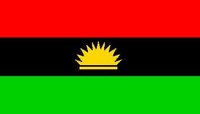 Speaking of Igbo, I went for a New Stateman summer shindig last night. As a former serf, sorry intern (easily mixed up), I was humbly invited by the man who organised it, the good Sam. The party had the great and the good of journalism and politics, Maitlis, Buerk, Hilsum, Hoon, MacShane, and Marshall-Andrews. Couldn't move for hacks and politerati. I met someone who has quite possibly written the first review of Chimamanda Ngozi Adichie's new book, Half of a Yellow Sun. The title comes from a short story she wrote. And, probably refers to the Biafran flag, which had a half yellow glowing sun jutting out of the middle black band (see flag) - the Biafran anthem was Land of the Rising Sun. It should appear in the Literary Review soon. I wanted to strangle him, as I'd kill to read the book. Perhaps I should have strangled him.
"The best book I've read all year", he said. Apparently, apart from the merits of the book in literary terms, it doesn't shy away from the politics. This is music to my ears. People don't want to talk about Biafra, the pink elephant in the cubicle. How on earth can Nigeria avoid it? But we trundle on, as if the fissures of 1966-70 have been mended. I also spoke to someone else who helped her with the book, and is acknowledged in it. "In twenty years time, she'll be talked about in the same breath as Chinua Achebe." Not my words. People don't make such comparisons lightly. So if this book is as successful as is anticipated, the whole world will be asking about Biafra. While we look at the pink elephant and hope it shrinks and disappears.
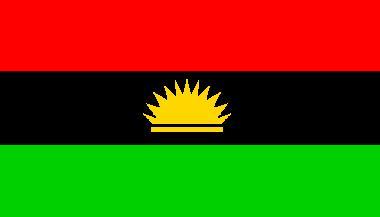 Speaking of Igbo, I went for a New Stateman summer shindig last night. As a former serf, sorry intern (easily mixed up), I was humbly invited by the man who organised it, the good Sam. The party had the great and the good of journalism and politics, Maitlis, Buerk, Hilsum, Hoon, MacShane, and Marshall-Andrews. Couldn't move for hacks and politerati. I met someone who has quite possibly written the first review of Chimamanda Ngozi Adichie's new book, Half of a Yellow Sun. The title comes from a short story she wrote. And, probably refers to the Biafran flag, which had a half yellow glowing sun jutting out of the middle black band (see flag) - the Biafran anthem was Land of the Rising Sun. It should appear in the Literary Review soon. I wanted to strangle him, as I'd kill to read the book. Perhaps I should have strangled him.
"The best book I've read all year", he said. Apparently, apart from the merits of the book in literary terms, it doesn't shy away from the politics. This is music to my ears. People don't want to talk about Biafra, the pink elephant in the cubicle. How on earth can Nigeria avoid it? But we trundle on, as if the fissures of 1966-70 have been mended. I also spoke to someone else who helped her with the book, and is acknowledged in it. "In twenty years time, she'll be talked about in the same breath as Chinua Achebe." Not my words. People don't make such comparisons lightly. So if this book is as successful as is anticipated, the whole world will be asking about Biafra. While we look at the pink elephant and hope it shrinks and disappears.
Wednesday, July 19, 2006
Tuesday, July 18, 2006
International Diplomacy for Dummies
No doubt you guys may have heard about Bush and Blair discussing international affairs, and the poor fellas didn't realise that a live microphone was picking up their words. The language with which Bush spoke about the Middle East crisis was fruity to say the least. One would have thought that both men were school prefects presiding over a petulant playground spat. The classic line is of course, "...to get Syria, to get Hizbullah to stop this shit and it's over." It almost equates to "tell Johnny to to tell Bobby to stop throwing stones, and no windows will be broken anymore." And "yo, Blair"? Is that Ali G underneath a Bush mask? International Diplomacy for Dummies:
Bush: Yo, Blair. How are you doing?
Blair: I'm just...
Bush: You're leaving?
Blair: No, no, no not yet. On this trade thingy ...[inaudible]
Bush: Yeah, I told that to the man.
Blair: Are you planning to say that here or not?
Bush: If you want me to.
Blair: Well, it's just that if the discussion arises ...
Bush: I just want some movement.
Blair: Yeah.
Bush: Yesterday we didn't see much movement.
Blair: No, no, it may be that it's not, it may be that it's impossible.
Bush: I am prepared to say it.
Blair: But it's just I think what we need to be an opposition...
Bush: Who is introducing the trade?
Blair: Angela [Merkel, the German chancellor].
Bush: Tell her to call 'em.
Blair: Yes.
Bush: Tell her to put him on, them on the spot. Thanks for [inaudible] it's awfully thoughtful of you.
Blair: It's a pleasure.
Bush: I know you picked it out yourself.
Blair: Oh, absolutely, in fact [inaudible].
Bush: What about Kofi? [inaudible] His attitude to ceasefire and everything else ... happens.
Blair: Yeah, no I think the [inaudible] is really difficult. We can't stop this unless you get this international business agreed.
Bush: Yeah.
Blair: I don't know what you guys have talked about, but as I say I am perfectly happy to try and see what the lie of the land is, but you need that done quickly because otherwise it will spiral.
Bush: I think Condi is going to go pretty soon.
Blair: But that's, that's, that's all that matters. But if you ... you see it will take some time to get that together.
Bush: Yeah, yeah.
Blair: But at least it gives people ...
Bush: It's a process, I agree. I told her your offer to ...
Blair: Well ... it's only if I mean ... you know. If she's got a ... or if she needs the ground prepared as it were ... Because obviously if she goes out, she's got to succeed, if it were, whereas I can go out and just talk.
Bush: You see, the ... thing is what they need to do is to get Syria, to get Hizbullah to stop doing this shit and it's over.
Blair: Syria.
Bush: Why?
Blair: Because I think this is all part of the same thing.
Bush: Yeah.
Blair: What does he think? He thinks if Lebanon turns out fine, if we get a solution in Israel and Palestine, Iraq goes in the right way ...
Bush: Yeah, yeah, he is sweet.
Blair: He is honey. And that's what the whole thing is about. It's the same with Iraq.
Bush: I felt like telling Kofi to call, to get on the phone to Assad and make something happen.
Blair: Yeah.
Bush: We are not blaming the Lebanese government.
Blair: Is this...? (at this point Blair taps the microphone in front of him and the sound is cut.)
Thanks to the Guardian for the transcript.
Bush: Yo, Blair. How are you doing?
Blair: I'm just...
Bush: You're leaving?
Blair: No, no, no not yet. On this trade thingy ...[inaudible]
Bush: Yeah, I told that to the man.
Blair: Are you planning to say that here or not?
Bush: If you want me to.
Blair: Well, it's just that if the discussion arises ...
Bush: I just want some movement.
Blair: Yeah.
Bush: Yesterday we didn't see much movement.
Blair: No, no, it may be that it's not, it may be that it's impossible.
Bush: I am prepared to say it.
Blair: But it's just I think what we need to be an opposition...
Bush: Who is introducing the trade?
Blair: Angela [Merkel, the German chancellor].
Bush: Tell her to call 'em.
Blair: Yes.
Bush: Tell her to put him on, them on the spot. Thanks for [inaudible] it's awfully thoughtful of you.
Blair: It's a pleasure.
Bush: I know you picked it out yourself.
Blair: Oh, absolutely, in fact [inaudible].
Bush: What about Kofi? [inaudible] His attitude to ceasefire and everything else ... happens.
Blair: Yeah, no I think the [inaudible] is really difficult. We can't stop this unless you get this international business agreed.
Bush: Yeah.
Blair: I don't know what you guys have talked about, but as I say I am perfectly happy to try and see what the lie of the land is, but you need that done quickly because otherwise it will spiral.
Bush: I think Condi is going to go pretty soon.
Blair: But that's, that's, that's all that matters. But if you ... you see it will take some time to get that together.
Bush: Yeah, yeah.
Blair: But at least it gives people ...
Bush: It's a process, I agree. I told her your offer to ...
Blair: Well ... it's only if I mean ... you know. If she's got a ... or if she needs the ground prepared as it were ... Because obviously if she goes out, she's got to succeed, if it were, whereas I can go out and just talk.
Bush: You see, the ... thing is what they need to do is to get Syria, to get Hizbullah to stop doing this shit and it's over.
Blair: Syria.
Bush: Why?
Blair: Because I think this is all part of the same thing.
Bush: Yeah.
Blair: What does he think? He thinks if Lebanon turns out fine, if we get a solution in Israel and Palestine, Iraq goes in the right way ...
Bush: Yeah, yeah, he is sweet.
Blair: He is honey. And that's what the whole thing is about. It's the same with Iraq.
Bush: I felt like telling Kofi to call, to get on the phone to Assad and make something happen.
Blair: Yeah.
Bush: We are not blaming the Lebanese government.
Blair: Is this...? (at this point Blair taps the microphone in front of him and the sound is cut.)
Thanks to the Guardian for the transcript.
Thursday, July 13, 2006
Why do they do it?
The phone rings, I don't recognise the number. Maybe it's an incredible job opportunity, perhaps Larry King has retired. But no, it's long lost family. My dad's cousin to be precise. Apparently it's amazing to know that my father has a manchild lurking in some corner of the earth. So after all, little ADC's loins were not solely for weeing by the huge iroko tree in the village square at night when nobody was watching. The ultimate act of rebellion in a pre-independence Nigerian village. Pee on the iroko tree, and the gods will make certain body parts fall off. You can see the attraction for a young rebel.
Little ADC's loins brought forth a child, many in fact, of which African Shirts is one. She was incredulous. She didn't tell me any of the weeing story, but she might as well have. I'd have blushed, and chuckled, and smiled, without uttering a word. Maybe the occasional "really!" Long lost family know how to make a grown man feel like sucking his thumb, and assuming the foetal position. You feel yea high.
A few years ago, on holiday in Washington DC, I had one such encounter. Nigerian wedding party setting, you know the type: abuse of dollars, abuse of gold, abuse of rims, abuse to make P Diddy skulk in inferiority. Who's the handsome (allow me artistic licence) young man with the funny accent? ADC's son. You don't mean it! So this woman asked me, sorry, told me, to dance with her. She'd known my dad since when men had lots of inches of hair and lots of inches on their shoe soles, the collars were large, and the trousers were tight. Except for the excess left-over material they added to the feet. Flares, they called it.
She was also emotional at seeing me, staring at me funny. Too many thoughts were in my head. "Dad, I hope you dumped her in the politest way possible," I thought. I wasn't ready for the sins of my father to be visited upon me with a handbag to the head. She had given no indication of any liaison with my dad whatsoever, but my doubly inflated ego (one ego for me, the other for Dad) was working overtime. As I boogie to whatever was playing, the deejay decides to go all highlife on us. My dad likes highlife, and I vicariously put on a few moves. Deadly moves, you're talking blood on the dancefloor moves. Suddenly she stops dancing. This is after she's been staring at me curiously throughout the dancing. "I can't believe it," she quips. "You even dance like your father."
Apples falling. Tree standing. Distance between them. None. So Daddy Was a Good Dancer. Song title of the year. Someone record it.
As a brief aside. I have an uncle in Nigeria who tells this one story every single time. "Nkem, you don big now o! I fit remember that time wey you piss for my hotel bed for London." When I have children, I will not be taking them to visit that particular uncle lest he embarrass me to death. No siree, I ain't having that.*
The thing that always makes me want to curl up and hide under a shrub is the frightful, "Ina nu kwa Igbo?" Do you understand Igbo? Strictly speaking, the answer is no. But because I know five Igbo phrases, I say "obele, obele." Small, small. I know "je waru" - go and bath, "je chi eze" - go and brush your teeth, "ina nu nte" - your ears don't hear (or something like that). Basically, issues of bedtime discipline. Quite how this is useful in adult conversation, I don't know. I'll brush my teeth when I damn well please. In fact, I won't brush 'em. Cane me if you dare. Yes that's three phrases, and in case you're wondering what the other two are, well, each "obele" counts as one individual phrase. Sue me.
However, the fact that you even say "obele, obele" is cue enough to start rattling away in Olumo Rock solid Igbo. Once they've started, that's the end. How do I tell them I haven't got a clue what they're on about? I listen in, trying to pick out words. It's like playing linguistic Su Doku on zen master level.
So my dad's cousin has insisted on speaking to me in Igbo. I should be visiting her soon. It will be an interesting conversation, as I have all my (English) responses worked out. No, Yes, I don't know. And for variation in Igbo, Mba, Ee (can't spell it), Amarom. Six responses in two different languages which mean just three things, for just one conversation. Chomsky, eat your heart out.
*caveat. I was a baby when this hotel bed thing happened...
Little ADC's loins brought forth a child, many in fact, of which African Shirts is one. She was incredulous. She didn't tell me any of the weeing story, but she might as well have. I'd have blushed, and chuckled, and smiled, without uttering a word. Maybe the occasional "really!" Long lost family know how to make a grown man feel like sucking his thumb, and assuming the foetal position. You feel yea high.
A few years ago, on holiday in Washington DC, I had one such encounter. Nigerian wedding party setting, you know the type: abuse of dollars, abuse of gold, abuse of rims, abuse to make P Diddy skulk in inferiority. Who's the handsome (allow me artistic licence) young man with the funny accent? ADC's son. You don't mean it! So this woman asked me, sorry, told me, to dance with her. She'd known my dad since when men had lots of inches of hair and lots of inches on their shoe soles, the collars were large, and the trousers were tight. Except for the excess left-over material they added to the feet. Flares, they called it.
She was also emotional at seeing me, staring at me funny. Too many thoughts were in my head. "Dad, I hope you dumped her in the politest way possible," I thought. I wasn't ready for the sins of my father to be visited upon me with a handbag to the head. She had given no indication of any liaison with my dad whatsoever, but my doubly inflated ego (one ego for me, the other for Dad) was working overtime. As I boogie to whatever was playing, the deejay decides to go all highlife on us. My dad likes highlife, and I vicariously put on a few moves. Deadly moves, you're talking blood on the dancefloor moves. Suddenly she stops dancing. This is after she's been staring at me curiously throughout the dancing. "I can't believe it," she quips. "You even dance like your father."
Apples falling. Tree standing. Distance between them. None. So Daddy Was a Good Dancer. Song title of the year. Someone record it.
As a brief aside. I have an uncle in Nigeria who tells this one story every single time. "Nkem, you don big now o! I fit remember that time wey you piss for my hotel bed for London." When I have children, I will not be taking them to visit that particular uncle lest he embarrass me to death. No siree, I ain't having that.*
The thing that always makes me want to curl up and hide under a shrub is the frightful, "Ina nu kwa Igbo?" Do you understand Igbo? Strictly speaking, the answer is no. But because I know five Igbo phrases, I say "obele, obele." Small, small. I know "je waru" - go and bath, "je chi eze" - go and brush your teeth, "ina nu nte" - your ears don't hear (or something like that). Basically, issues of bedtime discipline. Quite how this is useful in adult conversation, I don't know. I'll brush my teeth when I damn well please. In fact, I won't brush 'em. Cane me if you dare. Yes that's three phrases, and in case you're wondering what the other two are, well, each "obele" counts as one individual phrase. Sue me.
However, the fact that you even say "obele, obele" is cue enough to start rattling away in Olumo Rock solid Igbo. Once they've started, that's the end. How do I tell them I haven't got a clue what they're on about? I listen in, trying to pick out words. It's like playing linguistic Su Doku on zen master level.
So my dad's cousin has insisted on speaking to me in Igbo. I should be visiting her soon. It will be an interesting conversation, as I have all my (English) responses worked out. No, Yes, I don't know. And for variation in Igbo, Mba, Ee (can't spell it), Amarom. Six responses in two different languages which mean just three things, for just one conversation. Chomsky, eat your heart out.
*caveat. I was a baby when this hotel bed thing happened...
Man with urges
Emmanuel Milingo has absconded again. Why doesn't he just confess that he has urges, and he can't deal with them?
Seven Eleven
 Conspiracy theories are the stuff of cranks, bored geeks, and the Daily Express (which prints Diana conspiracy theories till this day). But some things are too obvious to overlook. Yesterday, July 11, 2006, the Indian city of Mumbai had to deal with a simultaneous bombing of its municipal rail network.
The first thing I noticed was the date, which was similar to three previous Al-Qaeda related bombings. First, the New York and Washington attacks took place on September 11, 2001. When the trains in Madrid were attacked on March 11, 2004, it was noted that it had happened exactly two and a half years after the Twin Towers went down.
And then came London, July 7, 2005. After July 7, I wondered what Al-Qaeda's obsession was with dates ending in "en". There was 9/11, 3/11, 7/7, and now, in Mumbai, a perfect date of 11/7. Or to use non-US date writing style, 7/11, cornershop par excellence Stateside. What does this all mean? Absolutely nothing. There have been other bombings on drab and ordinary dates, so these aren't necessarily part of an overarching pattern. If they were, I'm sure the authorities would have sussed it by now, and Al-Qaeda would be looking for different bombing patterns. On the first of the month, every third Tuesday, or some such pattern.
However, I also noticed that the first time Al-Qaeda came to wider world attention was on August 7, 1998. I was back in Nigeria for a long and memorable summer holiday when the US embassies in Nairobi and Dar es Salaam were gutted by truck bombs. That was the first time I heard of Osama bin Laden and his not-so-merry band of followers. The Lewinsky scandalised Clinton reacted with cruise missile strikes on a possible dual use factory in Sudan, a factory the Sudanese said was a pharmaceutical plant. These strikes caused Mr bin Laden to up sticks from Sudan and move to Afghanistan, where he probably remains to this day. Or does he?
My theory is that Osama bin Laden is in Nigeria. He's in a Shari'ah state somewhere in the north of the country, probably in Jigawa or Yobe. Nigeria does have its Taliban, self-styled on the resurgent former regime in Afghanistan. People in a country like Nigeria (land of many names) choosing to call their children Osama, should also count for something. Bin Laden also cites Nigeria as one of those countries that are "most qualified for liberation". Any sensible person really should agree with bin Laden, with a caveat of course. We pray "deliver us from evil", but we don't presume that we'd be delivered into a different kind of evil. Mr bin Laden, if you want a chance for a rebuttal stating that you won't deliver us into evil, drop me an email. I'm sure we can work something out.
The feeling that Nigeria is on the brink of Islamist implosion is shared by some think tanks and journalists. Jeffrey Tayler, writing in April's Atlantic magazine, implies that Nigeria is potentially worse than Iraq... I know. I felt disdain after reading the article, and I won't respond to it until I've got the disdain out of my system.
Back to Mumbai. I've been to Mumbai before, and it is a poverty stricken city. It might be India's financial hub, but the world's largest democracy still has a long way to go. One of the sadder elements of these attacks on countries like India and the US embassies in East Africa, is that these are the very countries that do not have the resources to deal with terrorism. But they are the countries constantly being attacked. A country needs sophisticaed technology, human intelligence gathering, man hours to prevent such attacks. But when (rather than if) an attack takes place, one at least needs an emergency operation system to swing into action. Once people have been treated and bodies have been removed from the wreckage, you now need to catch the culprits. Nigh on impossible.
Even though the West is in a perpetual state of panic over terrorist attacks, most of them occur in the developing world. The Indonesian resort of Bali has been bombed twice in three years, in Egypt, Sharm el-Sheikh was bombed in 2005 (shortly after July 7 in London), Dahab was bombed this year, and Sinai was bombed in 2004 (October 7). These are just countries that have had to deal with multiple attacks, but there's still Istanbul, Lebanon, and Iraq. Compare this to the three attacks in the West (New York, Madrid, and London), and compare the responses of the emergency services to these tragedies.
In Mumbai, the scenes were of utter chaos, meanwhile in July last year, I distinctly remember a police squad car being filmed by BBC News 24. The car was arriving at one of the bomb scenes; it looked for a space to park, and then reverse parked into a space it found. Parallel parking? You'd be hard pressed to find any calmer, mundane, and organised behaviour under such circumstances anywhere in the world.
Islamist terrorism has its roots in the developing world, and anyone who's serious about tackling it needs to look to these regions. The bombers of July 7 may have been "homegrown", but Mohammed Siddique Khan and Shehzad Tanweer both went to Pakistan, possibly for training. The Hamburg cell of September 11, had its roots in the Middle East, the Madrid bombers had ties to the Casablanca bombers. How do we solve this problem? I have no idea. But we know where to look.
Tuesday, July 11, 2006
Sunday, July 09, 2006
Zidane ruined the World Cup
 This was supposed to be his swansong, his sign-off, his final defining moment. It started off being his defining moment, but the reasons changed after the headbutt. He had scored an audacious penalty, threatened a repeat of the 1998 final when Buffon saved his header from point black range in extra time. He bestrode the pitch like a colossus, along with Henry, and Malouda, who played his best game of the tournament. The previously impenetrable Italian defence kept being carved open Christmas turkey style by France, and Zidane looked like doing it again.
And then the red mist descended. What did Materazzi say to him? One hopes that he insulted his mother, father, children, spat on the tricolour, and called him an Algerian camel to boot. But hold on a second, even that isn't enough. When you hear the phrase "unprovoked attack", you automatically think of a street thug assaulting an innocent person going about their daily business. Today, Zidane was that thug, and his attack on Materazzi was an arrestable offence. If that incident had happened anywhere other than on that pitch, he'd have been clapped in the stocks by the German Polizei.
On the day, France deserved to win, but in the grand scheme of the World Cup, Italy deserved victory. But what was shaping up to be the best World Cup final since 1986, ended as a ruined final, and probably ruined the World Cup for me. The most anticlimactic day of my life. More than a billion people were watching that madness on television. If he wasn't already retiring, he'd have been banned for a long long time. I was kicking myself for not making it to the match in Berlin because of a paucity of media tickets, but afterwards, I was glad not to have been there. I'd have been too downcast.
The World Cup was incredible, but I fear Zidane's behaviour might have ruined it for me. Zidane has showed his madness in the past - suspended for a stamping incident in 1998, suspended for the final group game against Togo this year, after picking up two yellows. Jean Marie Le Pen must be thinking, "I told them not to let that Algerian racaille play for Les Bleus". But Zidane is fallible. Zidane is a mere mortal. If he wasn't fallible, he wouldn't be human - he'd be God. Alas, no man is God. Congratulations to Italy, but what happened on that pitch?
Thabo Mbeki fancies me
Forgive the in-your-face red-top tabloid headline, but a sensational story requires a sensationalist telling. Like I said in my previous post, the unveiling ceremony was heaving with football glitterati, but if you look at the picture, you’ll see that the African politerati were there. (Do you like the “-rati” theme?) Alpha Oumar Konare, Chariman of the AU Commision, Kofi Annan, UN Secretary General, and Thabo Mbeki, President of South Africa.
The event was organised by the South African LOC, and it’s obvious that they were trying to stress that SA 2010 will be a decidedly African affair. Hence they trotted out the who’s who of African politics today. There should have been a concert later in the evening which would have been graced by Madiba (via satellite link), but the concert was called off due to a freak storm. Wyclef Jean, Youssou N’Dour, Sean Paul and a few others would have performed. I was gutted personally, because it would have been my one opportunity to be starstruck. I would have grabbed Wyclef by the leg, and not let go, until some burly bodyguards shot me with a taser gun. Good thing the heavens opened up and saved him.
Sepp Blatter. The Twit. Blatter’s introduction/speech was first. Blatter is a twit. I used to think that FIFA was the guardsman of football’s conscience, but after this World Cup, I’m forced to think again. During his speech he looked directly at Thabo Mbeki and said, “the market trusts Africa”. How does the market trust Africa? Well according to Blatter, “the contracts we have already signed are higher than the contracts for 2006 in Germany by about 25%”.
The BBC has done some calculations on the figures, and this puts SA already on £443m, while Germany secured contracts worth just £376m. I don’t have an MBA, and I’m not sure how he’s pulled this off. Several things don’t tally. The majority of the expenditure will be on transport, stadiums, and security. My worry is of personal safety and security in SA, but four years is a long time, so we'll see. South Africa has 4 times the area of Germany, but has half as many railway lines, and the same goes for paved roads. The GDP per capita of Germany is £18,409 while that of South Africa is £2,768. This automatically means that South Africans don’t have as much spending power as Germans. It isn’t cheaper to buy steel in South Africa than it is in other parts of the world. Labour costs for building railways and roads might be cheaper, but by no means cheap enough to compensate for the expense of commodities. How will the investors recoup their money? Surely they don’t expect to get everything back within the one month of the World Cup. Mbeki rejects the notion that his countrymen are too poor to make the World Cup in SA a success.
Blatter has also admitted that this World Cup was too commercial, evidenced by the truckloads of corporate spectators coming into the stadiums to watch games. FIFA will regain control of ticket allocation from 2010, as this year's was dealt with by the German LOC. Sponsors were allocated 16%, while corporate hospitality got 12%. Compare that to the mere 8% given to the teams playing. Teams such as England would have appreciated extra tickets when you consider that when England played Trinidad in Nuremberg, there were 70,000 fans in the city, and 70,000 in Frankfurt. FIFA will apparently reduce its corporate partnerships from 15 to 5 for 2010. Since the 5 partners for 2010 have coughed up more money than they did before, they will surely demand more power. In that case, one might as well give them the keys to Union Buildings in Pretoria. See what happened when Bavaria breweries tried ambush marketing. If Coke is one of the remaining partners, you’ll be looking at a situation where Pepsi would be banned from the airport as you land.
The condescending Blatter then went on about how the World Cup in Africa will be about “the drums” and “the music” in his annoying Swiss accent, shimmying for emphasis. And he kept referring to the dignitaries wives as “his woman”. “Kofi Annan and his woman”. His chauvinism is nothing new - in 2004, he said women footballers should play in "more feminine clothes." Imagine. I felt like getting up on stage and slapping his bald pate, but I wasn’t brave enough to withstand a potential Peter Tatchell from his minders.
Kofi Annan. The Diplomat. He delivered what was effectively his article in the International Herald Tribune of 9 June. Not terribly exciting, which might explain why he’s a diplomat. Unduly exciting a warring faction during disarmament talks couldn’t possibly be a good idea.
Issa Hayatou. The Disappointment. Like the embodiment of the disorganised CAF that he heads, didn’t have a speech ready. And this is the man, who’s about to oversee the greatest show on earth. He did okay winging it (in French), but on such an occasion, one cannot afford to slack. And he slack he did. Blatter even managed a sly dig at him, saying he had been CAF President since forever (1988).
Alpha Oumar Konare. The Orator. He was the most impressive of all. It is easy to see how this former president of Mali became AU Commision Chairman. Remove all negative connotations associated with demagoguery and you have Konare. His speech in French was buoyant, rousing, and emotive, all at once – a layered gateau of a speech.
Thabo Mbeki. The Statesman. The president promised that SA would host the best World Cup ever. This is no faint promise, but there were many journalists there, so he knows he’ll be quoted. However, in 2010, it’s likely that Jacob Zuma will be in his seat, taking all the heat. He was calm and assuring, and for me, possibly the clincher in convincing me that SA can do it.
On to the reason for the title of this post, if you’re still reading. After they gave their speeches, they was a question and answer session with journalists. The grandees were on stage answering questions, while the World Cup ambassadors (former players) were doing up close and personal interviews with cameras and mics shoved in their faces. The type of which I’ve become expert in the past month.
At this point a journalist has to choose what to do. Does he get a proper interview with the lesser mortals, such as the players? Or does he ignore the former players, raise his hand to ask the grandees a question which will have them quaking in their kaftans? Also considering that there might be too many hacks trying to ask questions, their turn may never come.
Here’s what we did. We talked to the players first. Since we’re doing television, exclusivity is important. One player talking to our camera is worth more than a public sit-down chinwag, where one can’t even tell where the questions are coming from because of the great media junket. After the grandees finished their an audience with, it was time for them to leave. At this point we stand in front of the stage, trying to get Mr Mbeki’s attention. Hopefully, he’ll thrown some words towards our way. But as he headed for the exit, his bodyguards set up suited, mobile ear-pieced rugby scrum around him. Nobody would touch Mr President. We kept getting shoved along as he walked, stopping to shake the odd hand. I tried to shout, “Mr President, Mr President”. “You’ve had your chance”, the bodyguard would bark.
We’d almost been squished like little moths, when I made a final attempt to get his attention. “Mr President, for Nigerian tv!” At which point he turned towards me, and I blurted out a question. For the life of me, I cannot remember what I asked him. It was all a blur. Thabo Mbeki then came to me, shook my hand, and gave me a lengthy answer (while still holding my hand). I said, “Thank you, Mr President.” “Thank you, my brother”, he smiled. And the scrum continued.
I felt like a billion rand. Still do. In that moment, when he stopped to grant me a few words, it felt like I was floating on something. The next time a mother faints when Bill Clinton kisses her baby, I’ll understand what she’s experienced. Thabo is no Bill, but power is an aphrodisiac, and when harnessed right, it could create supernovas. Afterwards, someone asked if I was related to Thabo Mbeki, because he'd given me so much attention. Well, we did go to the same university. But that wasn't it - he fancied me. That brief moment was a flirtation of sorts, and I was tooken.
The emblem. I like the emblem. It’s better than the one for this year. It is very organic, represents South Africa, Africa, football, and even more specifically, the vibrancy of African football. I spoke to a German woman at the launch who didn’t like the man, saying it was a default clichéd symbol used to depict Africa all the time. As far as she was concerned, if there was any time to avoid stereotypes, this was it. But the image transcends clichés. Rock art is as old as art itself, and South African heritage is connected to those early depictions of man. If the world didn’t already know that, now is their chance to learn. South Africa in 2010? It can happen.
The event was organised by the South African LOC, and it’s obvious that they were trying to stress that SA 2010 will be a decidedly African affair. Hence they trotted out the who’s who of African politics today. There should have been a concert later in the evening which would have been graced by Madiba (via satellite link), but the concert was called off due to a freak storm. Wyclef Jean, Youssou N’Dour, Sean Paul and a few others would have performed. I was gutted personally, because it would have been my one opportunity to be starstruck. I would have grabbed Wyclef by the leg, and not let go, until some burly bodyguards shot me with a taser gun. Good thing the heavens opened up and saved him.
Sepp Blatter. The Twit. Blatter’s introduction/speech was first. Blatter is a twit. I used to think that FIFA was the guardsman of football’s conscience, but after this World Cup, I’m forced to think again. During his speech he looked directly at Thabo Mbeki and said, “the market trusts Africa”. How does the market trust Africa? Well according to Blatter, “the contracts we have already signed are higher than the contracts for 2006 in Germany by about 25%”.
The BBC has done some calculations on the figures, and this puts SA already on £443m, while Germany secured contracts worth just £376m. I don’t have an MBA, and I’m not sure how he’s pulled this off. Several things don’t tally. The majority of the expenditure will be on transport, stadiums, and security. My worry is of personal safety and security in SA, but four years is a long time, so we'll see. South Africa has 4 times the area of Germany, but has half as many railway lines, and the same goes for paved roads. The GDP per capita of Germany is £18,409 while that of South Africa is £2,768. This automatically means that South Africans don’t have as much spending power as Germans. It isn’t cheaper to buy steel in South Africa than it is in other parts of the world. Labour costs for building railways and roads might be cheaper, but by no means cheap enough to compensate for the expense of commodities. How will the investors recoup their money? Surely they don’t expect to get everything back within the one month of the World Cup. Mbeki rejects the notion that his countrymen are too poor to make the World Cup in SA a success.
Blatter has also admitted that this World Cup was too commercial, evidenced by the truckloads of corporate spectators coming into the stadiums to watch games. FIFA will regain control of ticket allocation from 2010, as this year's was dealt with by the German LOC. Sponsors were allocated 16%, while corporate hospitality got 12%. Compare that to the mere 8% given to the teams playing. Teams such as England would have appreciated extra tickets when you consider that when England played Trinidad in Nuremberg, there were 70,000 fans in the city, and 70,000 in Frankfurt. FIFA will apparently reduce its corporate partnerships from 15 to 5 for 2010. Since the 5 partners for 2010 have coughed up more money than they did before, they will surely demand more power. In that case, one might as well give them the keys to Union Buildings in Pretoria. See what happened when Bavaria breweries tried ambush marketing. If Coke is one of the remaining partners, you’ll be looking at a situation where Pepsi would be banned from the airport as you land.
The condescending Blatter then went on about how the World Cup in Africa will be about “the drums” and “the music” in his annoying Swiss accent, shimmying for emphasis. And he kept referring to the dignitaries wives as “his woman”. “Kofi Annan and his woman”. His chauvinism is nothing new - in 2004, he said women footballers should play in "more feminine clothes." Imagine. I felt like getting up on stage and slapping his bald pate, but I wasn’t brave enough to withstand a potential Peter Tatchell from his minders.
Kofi Annan. The Diplomat. He delivered what was effectively his article in the International Herald Tribune of 9 June. Not terribly exciting, which might explain why he’s a diplomat. Unduly exciting a warring faction during disarmament talks couldn’t possibly be a good idea.
Issa Hayatou. The Disappointment. Like the embodiment of the disorganised CAF that he heads, didn’t have a speech ready. And this is the man, who’s about to oversee the greatest show on earth. He did okay winging it (in French), but on such an occasion, one cannot afford to slack. And he slack he did. Blatter even managed a sly dig at him, saying he had been CAF President since forever (1988).
Alpha Oumar Konare. The Orator. He was the most impressive of all. It is easy to see how this former president of Mali became AU Commision Chairman. Remove all negative connotations associated with demagoguery and you have Konare. His speech in French was buoyant, rousing, and emotive, all at once – a layered gateau of a speech.
Thabo Mbeki. The Statesman. The president promised that SA would host the best World Cup ever. This is no faint promise, but there were many journalists there, so he knows he’ll be quoted. However, in 2010, it’s likely that Jacob Zuma will be in his seat, taking all the heat. He was calm and assuring, and for me, possibly the clincher in convincing me that SA can do it.
On to the reason for the title of this post, if you’re still reading. After they gave their speeches, they was a question and answer session with journalists. The grandees were on stage answering questions, while the World Cup ambassadors (former players) were doing up close and personal interviews with cameras and mics shoved in their faces. The type of which I’ve become expert in the past month.
At this point a journalist has to choose what to do. Does he get a proper interview with the lesser mortals, such as the players? Or does he ignore the former players, raise his hand to ask the grandees a question which will have them quaking in their kaftans? Also considering that there might be too many hacks trying to ask questions, their turn may never come.
Here’s what we did. We talked to the players first. Since we’re doing television, exclusivity is important. One player talking to our camera is worth more than a public sit-down chinwag, where one can’t even tell where the questions are coming from because of the great media junket. After the grandees finished their an audience with, it was time for them to leave. At this point we stand in front of the stage, trying to get Mr Mbeki’s attention. Hopefully, he’ll thrown some words towards our way. But as he headed for the exit, his bodyguards set up suited, mobile ear-pieced rugby scrum around him. Nobody would touch Mr President. We kept getting shoved along as he walked, stopping to shake the odd hand. I tried to shout, “Mr President, Mr President”. “You’ve had your chance”, the bodyguard would bark.
We’d almost been squished like little moths, when I made a final attempt to get his attention. “Mr President, for Nigerian tv!” At which point he turned towards me, and I blurted out a question. For the life of me, I cannot remember what I asked him. It was all a blur. Thabo Mbeki then came to me, shook my hand, and gave me a lengthy answer (while still holding my hand). I said, “Thank you, Mr President.” “Thank you, my brother”, he smiled. And the scrum continued.
I felt like a billion rand. Still do. In that moment, when he stopped to grant me a few words, it felt like I was floating on something. The next time a mother faints when Bill Clinton kisses her baby, I’ll understand what she’s experienced. Thabo is no Bill, but power is an aphrodisiac, and when harnessed right, it could create supernovas. Afterwards, someone asked if I was related to Thabo Mbeki, because he'd given me so much attention. Well, we did go to the same university. But that wasn't it - he fancied me. That brief moment was a flirtation of sorts, and I was tooken.
The emblem. I like the emblem. It’s better than the one for this year. It is very organic, represents South Africa, Africa, football, and even more specifically, the vibrancy of African football. I spoke to a German woman at the launch who didn’t like the man, saying it was a default clichéd symbol used to depict Africa all the time. As far as she was concerned, if there was any time to avoid stereotypes, this was it. But the image transcends clichés. Rock art is as old as art itself, and South African heritage is connected to those early depictions of man. If the world didn’t already know that, now is their chance to learn. South Africa in 2010? It can happen.
Saturday, July 08, 2006
South Africa 2010
 The circus moves on. I went to the unveiling of the South Africa 2010 emblem in Berlin yesterday. You couldn't move for football glitterati: Hadji, Abedi Pele, Roger Milla. If you haven't seen the emblem yet, that's what it looks like (right). I'll write down my thoughts on the event later today, but my initial reaction (after much scepticism) is that South Africa can pull it off.
Thursday, July 06, 2006
Theo's Diary
Woke up this afternoon after getting an overnight train from France v Portugal in Munich, and saw this in my inbox. A tad harsh on Sol Campbell perhaps, but such is the nature of satire.
What I did on my summer holiday
By Theo Walcott Esq aged 8 1/2
I went to a place called Germany with my Uncle Sven and some other grown ups. It is a country in Europe where a bad man called Adolf used to live with his nazties, he does not live there anymore, Uncle Owen does live there, and the grown up's say I can't talk about the bad man as it will make Uncle Owen cry if I do. In Germany there are lots of castles and some mountains. We are staying in a place called Baden Baden that's a silly name, Uncle Frank has the same name as his dad, that's silly too, his mum must get their underpants mixed up all the time.
On the airplane Uncle Sol sat next to me, he got me some toffee and wants to be my friend, he works at the place where I do my YTS, so does Uncle Freddy but him and Uncle Sol are not best friends anymore.
Uncle Owen met us at the airport, he talks foreign, Uncle Wayne, Uncle Steven and Uncle David also talk funny, my mum says Uncle David talks like Orville, he is a duck, Uncle Sol say's uncle David wears dresses and knickers, and asked me if I had ever worn them. Uncle Sol got me some pop.
In Germany the grown ups are going to play football, my granddad says we beat them in the olden days before my mum was born. That is a long time ago.
While the grown up's went to play football so I went shopping with Auntie Vicky and some other girls she bought me a big ice cream and got herself a little one but she said she was full before she had eaten any and threw it away. She bought lots of shoes and handbags and let me play with Brooklyn. She say's she used to be in a pop band and sang me one of her songs, I think she was telling fibs.
I told Uncle Sol about my day out with Vicky and he sulked, then he bought me an even bigger ice cream with lots of hundred's & thousands on it.
All the other grown up's have a girlfriend except Uncle Sol so he plays with me while they go out. Uncle Sven says I must keep Uncle Sol happy, that's why I got taken on holiday.
The grown up's went to play Football against somebody called Sweden, Uncle Sol was crying as Uncle Freddy played for them and would not talk to him. Uncle Sol bought me lots of toffee today and some crisps. Uncle Sven is from Sweden and I heard him on the phone to their boss last night. Uncle Michael hurt his knee and had to go home to his mum for a plaster. Uncle Peter is a giant, a proper giant like you see in books, he is rubbish at football though.
Uncle Wayne had a sore toe at the start of out holiday but it got better so they let him play football. Uncle Sol got me a present but I do not like it. He says all Germans wear leather underpants and I should while we are here, they are too tight for me.
All the grown up's started to call Uncle Wayne a potato head who stood on somebody’s spuds. He got shouted at by the referee. They are all saying that we have to go home now. Uncle Sol was crying again and I had to sit on his knee to make him stop. He had his mobile phone in his pocket, I think.
What I did on my summer holiday
By Theo Walcott Esq aged 8 1/2
I went to a place called Germany with my Uncle Sven and some other grown ups. It is a country in Europe where a bad man called Adolf used to live with his nazties, he does not live there anymore, Uncle Owen does live there, and the grown up's say I can't talk about the bad man as it will make Uncle Owen cry if I do. In Germany there are lots of castles and some mountains. We are staying in a place called Baden Baden that's a silly name, Uncle Frank has the same name as his dad, that's silly too, his mum must get their underpants mixed up all the time.
On the airplane Uncle Sol sat next to me, he got me some toffee and wants to be my friend, he works at the place where I do my YTS, so does Uncle Freddy but him and Uncle Sol are not best friends anymore.
Uncle Owen met us at the airport, he talks foreign, Uncle Wayne, Uncle Steven and Uncle David also talk funny, my mum says Uncle David talks like Orville, he is a duck, Uncle Sol say's uncle David wears dresses and knickers, and asked me if I had ever worn them. Uncle Sol got me some pop.
In Germany the grown ups are going to play football, my granddad says we beat them in the olden days before my mum was born. That is a long time ago.
While the grown up's went to play football so I went shopping with Auntie Vicky and some other girls she bought me a big ice cream and got herself a little one but she said she was full before she had eaten any and threw it away. She bought lots of shoes and handbags and let me play with Brooklyn. She say's she used to be in a pop band and sang me one of her songs, I think she was telling fibs.
I told Uncle Sol about my day out with Vicky and he sulked, then he bought me an even bigger ice cream with lots of hundred's & thousands on it.
All the other grown up's have a girlfriend except Uncle Sol so he plays with me while they go out. Uncle Sven says I must keep Uncle Sol happy, that's why I got taken on holiday.
The grown up's went to play Football against somebody called Sweden, Uncle Sol was crying as Uncle Freddy played for them and would not talk to him. Uncle Sol bought me lots of toffee today and some crisps. Uncle Sven is from Sweden and I heard him on the phone to their boss last night. Uncle Michael hurt his knee and had to go home to his mum for a plaster. Uncle Peter is a giant, a proper giant like you see in books, he is rubbish at football though.
Uncle Wayne had a sore toe at the start of out holiday but it got better so they let him play football. Uncle Sol got me a present but I do not like it. He says all Germans wear leather underpants and I should while we are here, they are too tight for me.
All the grown up's started to call Uncle Wayne a potato head who stood on somebody’s spuds. He got shouted at by the referee. They are all saying that we have to go home now. Uncle Sol was crying again and I had to sit on his knee to make him stop. He had his mobile phone in his pocket, I think.
Wednesday, July 05, 2006
Soccer-punch
Before France played Brazil, I told my mum that France would win. I was proved right. And before Germany played Italy, I told her that Italy would win. Why did I think a scandalised Italian team would beat an invigorated Germany? Because the Italians are the kings of the soccer punch, pun intended. The Italians are the most ruthless in world football, and if any team would beat Germany in Dortmund where the German team had never lost before, it would be Italy. They might not have the Ronaldinhos or the Zidanes of this world, but boy they can make an opponent cry.
In Dortmund, the Azzuris sang the national anthem like no other team at this competition. To them, the words weren't just sweet nothings about how they love their country, but a battle cry to smother the Teutons to the north. It was difficult to believe the vast majority of the 65,000 capacity crowd were supporting the other team. They were so brazen. Cannavaro did what he's done all tournament, defended like his life depended on it. He organised the defence like Caesar would have organised onslaughts on the rest of Europe. His tackling and presence must have been intimidating for the German team.
And then there was Pirlo. Pirlo ran. And ran. And ran. The man was a dynamo with the Energizer Bunny cranking his internal wheels. We had to leave the stadium before the final whistle, so we didn't see anyof the goals. But we could feel the sigh when Germany lost. 2-0. 119th and 120th minute. Ouch. "Shaizer Italien" replaced "Fahre nach Berlin" (going to Berlin), which has become the chanson du jour. Instead, they fahre nach Stuttgart for the third place play-off match. A bit of despondence, but nevertheless a proud nation. The flags kept flying and a song was never far from their lips. And after a four weeks of the German Woodstock, the clichés trickle in. It's only football. You can't win them all. We'll be back. All good things must come to an end.
In Dortmund, the Azzuris sang the national anthem like no other team at this competition. To them, the words weren't just sweet nothings about how they love their country, but a battle cry to smother the Teutons to the north. It was difficult to believe the vast majority of the 65,000 capacity crowd were supporting the other team. They were so brazen. Cannavaro did what he's done all tournament, defended like his life depended on it. He organised the defence like Caesar would have organised onslaughts on the rest of Europe. His tackling and presence must have been intimidating for the German team.
And then there was Pirlo. Pirlo ran. And ran. And ran. The man was a dynamo with the Energizer Bunny cranking his internal wheels. We had to leave the stadium before the final whistle, so we didn't see anyof the goals. But we could feel the sigh when Germany lost. 2-0. 119th and 120th minute. Ouch. "Shaizer Italien" replaced "Fahre nach Berlin" (going to Berlin), which has become the chanson du jour. Instead, they fahre nach Stuttgart for the third place play-off match. A bit of despondence, but nevertheless a proud nation. The flags kept flying and a song was never far from their lips. And after a four weeks of the German Woodstock, the clichés trickle in. It's only football. You can't win them all. We'll be back. All good things must come to an end.
Monday, July 03, 2006
World United...
 In 1969, during the Nigerian Civil War in
Subscribe to:
Posts (Atom)